What the SRS Airbag Control Module Actually Does in Your Vehicle
Understanding the Brain Behind Your Vehicle’s Safety Systems
When drivers think about vehicle safety, they often picture airbags or seat belts. What rarely comes to mind is the system quietly controlling when and how those safety features activate. That system is the SRS (Supplemental Restraint System) airbag control module, and it plays a far larger role than most people realize.
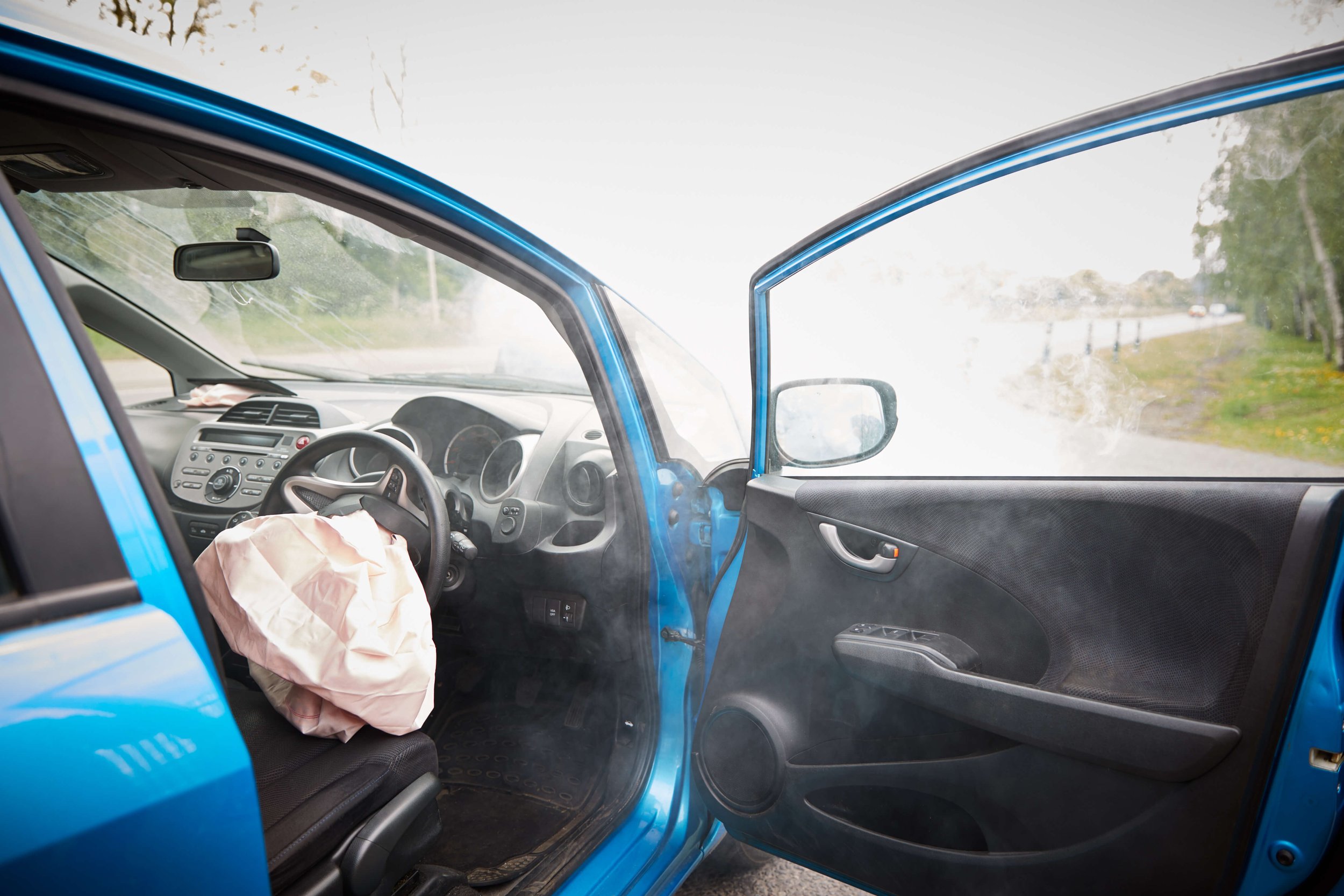
In modern vehicles across Houston and throughout Texas, this module acts as the decision-making center for critical safety responses.
What the SRS Module Is Designed to Do
The SRS control module is essentially the safety brain of your vehicle. Its job is not to deploy airbags randomly or aggressively, but to make precise, split-second decisions based on real-time data.
It continuously monitors:
Impact and crash sensors
Seat belt pretensioner status
Occupant position and weight sensors
Vehicle speed and deceleration patterns
All of this information is processed instantly to determine whether airbags should deploy, seat belts should tighten, or certain systems should remain inactive to prevent unnecessary injury.
Why Vehicles Rely on a Central Safety Controller
Modern vehicles are engineered around controlled responses. Airbags deploying too late, too early, or when not required can be dangerous. The SRS module ensures that:
Airbags deploy only in qualifying collisions
Seat belts tighten at the correct moment
Occupant-specific protections are applied correctly
Without this centralized logic, safety systems would operate blindly.
The SRS Module’s Role Beyond Airbags
Despite the name, the SRS module does far more than airbags alone. It governs:
Seat belt pretensioners
Occupant classification systems
Crash event recording
Communication with other vehicle safety modules
This interconnected role means that when the SRS module is compromised, multiple safety systems may be affected simultaneously.
Why This Matters After an Accident
After a collision, even a relatively minor one, the SRS module may register an event that alters its internal status. When that happens, warning lights can appear and safety systems may be disabled until the issue is properly addressed.
This is where specialized safety system knowledge becomes critical.
A Calm, Correct Next Step
Understanding what the SRS module does is the first step in making informed decisions after an accident. At DNA Safety Repair, safety systems are not treated as guesswork or general mechanical work. They are handled with focused expertise, precise diagnostics, and manufacturer-aware processes.
If your vehicle is showing an SRS or airbag warning light after a collision, having the system evaluated by a dedicated safety repair specialist ensures your vehicle’s protection systems are restored correctly and confidently. For any body work assistance be sure to go to our highly trusted collision center located in the same parking lot DNA Collision Center.

Send us your airbag module to erase crash data hard codes and turn off the airbag light.* Don't spend hundreds of dollars buying a replacement. Save money and time by mailing us your airbag control module. Once your ACM is received, our experts will reset the airbag control module, and erase hard codes. We work with most makes and models.
How It Works:
Complete the checkout process
Safely remove your airbag module, and ship it to us or drop it off at our shop
Our technicians will reset your airbag module and send it back within 1 business day
Safely install it back in your vehicle and you're all done!
After checkout, ship your airbag module to: 14109 Aldine Westfield Rd. Suite F. Houston Tx. 77039
You are purchasing a service, not an actual product
Please contact us before purchasing if your vehicle is older than 2005